Buy rumy.eu ?
We are moving the project
rumy.eu .
Are you interested in purchasing the domain
rumy.eu ?
domain@kv-gmbh.de · 0541-91531010
Buy rumy.eu ?
How are Latin subjunctive subordinate clauses still translated with the subjunctive?
Latin subjunctive subordinate clauses are still translated with the subjunctive in English to convey the same sense of uncertainty, possibility, or doubt. In English, the subjunctive mood is used to express hypothetical or unreal situations, wishes, recommendations, or demands. Therefore, when translating Latin subjunctive subordinate clauses, the English subjunctive is used to maintain the same mood and meaning of the original Latin sentence. **
Perhaps, subjunctive or indicative?
The choice between subjunctive or indicative depends on the context of the sentence. The subjunctive mood is used to express hypothetical or uncertain situations, wishes, recommendations, or doubts. On the other hand, the indicative mood is used for statements of fact or certainty. Therefore, if the sentence is expressing a possibility, doubt, or desire, the subjunctive mood would be more appropriate. **


Similar search terms for Subjunctive
Top-Angebote
Products related to Subjunctive:
-
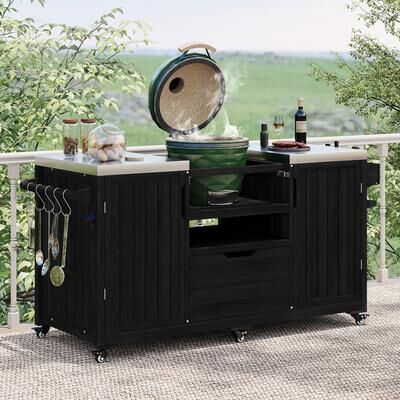
Ostweer Modern Outdoor Kitchen Island Grill Cart with Drawer, Rolling Island Table Serving Cart with Spice RackElevate your outdoor grilling with this 66.5-inch Big Green Egg table, crafted from 100% solid fir wood and featuring a 1.2-inch thick 201 stainless steel countertop.536,78 $*Shipping: 0,00 $Secure redirect to the provider
-
Laural Home "Tropical Island 13x72 Runner - 13"" x 72""""This tropical themed runner, ""Tropical Island,"" is a bright and fun design that will liven up any dining space. This watercolor styled runner features vibrant pink, orange, and green tropical flowers and leaves against a white background."37,99 $*Shipping: 0,00 $Secure redirect to the provider



-
Maybe subjunctive or indicative?
The choice between subjunctive or indicative depends on the context of the sentence. The subjunctive mood is used to express doubt, uncertainty, desire, or hypothetical situations, while the indicative mood is used for statements of fact or certainty. To determine whether to use subjunctive or indicative, consider the verb's relationship to reality and whether it is expressing a fact or a possibility. **
-
Conditional, subjunctive or indicative?
The choice between conditional, subjunctive, or indicative mood depends on the context of the sentence. The conditional mood is used to express a hypothetical situation or a condition that is dependent on something else happening. The subjunctive mood is used to express wishes, recommendations, or possibilities. The indicative mood is used to state facts or ask questions. **
-
What is the use of the present subjunctive and the past subjunctive?
The present subjunctive is used to express desires, doubts, wishes, or hypothetical situations in the present or future. It is often used after certain verbs and conjunctions that indicate uncertainty or subjectivity. The past subjunctive, on the other hand, is used to express desires, doubts, wishes, or hypothetical situations in the past. It is often used in the same way as the present subjunctive, but in reference to past events or situations. Both subjunctive forms are used to convey uncertainty or subjectivity in a sentence. **
-
Are the subjunctive I and the subjunctive II present in all tenses?
No, the subjunctive I and subjunctive II are not present in all tenses. The subjunctive I is only present in the present tense, while the subjunctive II is present in the past tense. The subjunctive I is used to express wishes, suggestions, or hypothetical situations in the present, while the subjunctive II is used to express wishes, suggestions, or hypothetical situations in the past. Each tense has its own specific form of the subjunctive mood. **


When is the subjunctive used?
The subjunctive is used to express desires, doubts, wishes, possibilities, recommendations, or hypothetical situations. It is often used in dependent clauses following certain verbs or expressions that convey these meanings. The subjunctive mood is used to show uncertainty or subjectivity in a sentence, rather than stating a fact or certainty. It is important to pay attention to the context and the verb that triggers the use of the subjunctive in order to use it correctly. **
'It is strange that + subjunctive'
It is strange that she should be so calm in such a chaotic situation. **
Top-Angebote
Products related to Subjunctive:
-
Inspire Picks Pirate Barrel Sword Game For Kids Interactive Wooden Prank Board Game Pirate Barrel Sword Game For Kids Interactive Wooden Prank Board GameSet sail for laughter and surprise with this classic pirate bucket toy that turns every round into a suspensefilled adventure. Inspired by the beloved popup pirate game, kids take turns inserting swords into the barrelnever knowing when the pirate...34,93 $*Shipping: 0,00 $Secure redirect to the provider
-
Inspired Living Pirate Treasure Hunt Map For Kids Vintage Kraft Party Adventure Map bTurn an ordinary party into a swashbuckling adventure filled with clues, imagination, and hidden treasure. This pirate treasure map gives young adventurers a fun centerpiece for pretend play, scavenger hunts, and themed celebrations. Its vintage...23,97 $*Shipping: 0,00 $Secure redirect to the provider
-
Ostweer Modern Outdoor Kitchen Island Grill Cart with Drawer, Rolling Island Table Serving Cart with Spice RackElevate your outdoor grilling with this 66.5-inch Big Green Egg table, crafted from 100% solid fir wood and featuring a 1.2-inch thick 201 stainless steel countertop.536,78 $*Shipping: 0,00 $Secure redirect to the provider
-
How are Latin subjunctive subordinate clauses still translated with the subjunctive?
Latin subjunctive subordinate clauses are still translated with the subjunctive in English to convey the same sense of uncertainty, possibility, or doubt. In English, the subjunctive mood is used to express hypothetical or unreal situations, wishes, recommendations, or demands. Therefore, when translating Latin subjunctive subordinate clauses, the English subjunctive is used to maintain the same mood and meaning of the original Latin sentence. **
-
Perhaps, subjunctive or indicative?
The choice between subjunctive or indicative depends on the context of the sentence. The subjunctive mood is used to express hypothetical or uncertain situations, wishes, recommendations, or doubts. On the other hand, the indicative mood is used for statements of fact or certainty. Therefore, if the sentence is expressing a possibility, doubt, or desire, the subjunctive mood would be more appropriate. **
-
Maybe subjunctive or indicative?
The choice between subjunctive or indicative depends on the context of the sentence. The subjunctive mood is used to express doubt, uncertainty, desire, or hypothetical situations, while the indicative mood is used for statements of fact or certainty. To determine whether to use subjunctive or indicative, consider the verb's relationship to reality and whether it is expressing a fact or a possibility. **
-
Conditional, subjunctive or indicative?
The choice between conditional, subjunctive, or indicative mood depends on the context of the sentence. The conditional mood is used to express a hypothetical situation or a condition that is dependent on something else happening. The subjunctive mood is used to express wishes, recommendations, or possibilities. The indicative mood is used to state facts or ask questions. **
Similar search terms for Subjunctive
-
Laural Home "Tropical Island 13x72 Runner - 13"" x 72""""This tropical themed runner, ""Tropical Island,"" is a bright and fun design that will liven up any dining space. This watercolor styled runner features vibrant pink, orange, and green tropical flowers and leaves against a white background."37,99 $*Shipping: 0,00 $Secure redirect to the provider
-
Ostweer "Grill Cart Table 80.5"" Outdoor Kitchen Island with Storage Rack, Rolling Island Table Serving Cart with Spice Rack""Elevate your outdoor grilling with this all-in-one 80.3-inch kitchen island, designed to hold both a Large Big Green Egg (or Kamado Joe) AND a 22-28"" tabletop grill like a Blackstone griddle simultaneously."603,49 $*Shipping: 0,00 $Secure redirect to the provider
-
The Handy Homestead Sugarcane Pulp Bowls Pack Biodegradable Soup And Noodle Bowls Sugarcane Pulp Bowls Pack Biodegradable Soup And Noodle BowlsEnjoy easy cleanup without the guilt. These 50pcs biodegradable bowls are made for serving soups, noodles, snacks, salads, and small meals while keeping your tableware choice cleaner and more planetconscious. Designed for homes, parties, food prep,...29,97 $*Shipping: 0,00 $Secure redirect to the provider
-
What is the use of the present subjunctive and the past subjunctive?
The present subjunctive is used to express desires, doubts, wishes, or hypothetical situations in the present or future. It is often used after certain verbs and conjunctions that indicate uncertainty or subjectivity. The past subjunctive, on the other hand, is used to express desires, doubts, wishes, or hypothetical situations in the past. It is often used in the same way as the present subjunctive, but in reference to past events or situations. Both subjunctive forms are used to convey uncertainty or subjectivity in a sentence. **
-
Are the subjunctive I and the subjunctive II present in all tenses?
No, the subjunctive I and subjunctive II are not present in all tenses. The subjunctive I is only present in the present tense, while the subjunctive II is present in the past tense. The subjunctive I is used to express wishes, suggestions, or hypothetical situations in the present, while the subjunctive II is used to express wishes, suggestions, or hypothetical situations in the past. Each tense has its own specific form of the subjunctive mood. **
-
When is the subjunctive used?
The subjunctive is used to express desires, doubts, wishes, possibilities, recommendations, or hypothetical situations. It is often used in dependent clauses following certain verbs or expressions that convey these meanings. The subjunctive mood is used to show uncertainty or subjectivity in a sentence, rather than stating a fact or certainty. It is important to pay attention to the context and the verb that triggers the use of the subjunctive in order to use it correctly. **
-
'It is strange that + subjunctive'
It is strange that she should be so calm in such a chaotic situation. **
* All prices are inclusive of VAT and, if applicable, plus shipping costs. The offer information is based on the details provided by the respective shop and is updated through automated processes. Real-time updates do not occur, so deviations can occur in individual cases. ** Note: Parts of this content were created by AI.